E-Bike & Electric Scooter Laws by US State: Speed, Sidewalk Rules 2026
Check 2026 US state regulations for e-bikes and electric scooters. Learn legal maximum speed limits, sidewalk riding rules, 3-class e-bike standards to avoid legal risks for import and riding.
E-Bike and Electric Scooter Laws by US State: Maximum Speed & Sidewalk Regulations (Updated 2026)
Micromobility products including electric bikes (e-bikes) and standing electric scooters are rapidly growing in demand across the United States. However, there is no unified nationwide traffic law for e-bikes and e-scooters. Federal regulations only define basic product safety standards. Actual road usage rules are formulated separately by each U.S. state and local city governments. In most cases, municipal ordinances can set stricter limits than statewide laws, leading to huge legal differences between different regions.
This official guide summarizes the latest 2026 state-level laws for electric bicycles and electric scooters, focusing on the most critical concerns for importers, distributors and riders: legal maximum speed limits and sidewalk riding permissions. This information helps buyers select compliant models, avoid traffic fines, vehicle confiscation and potential legal risks after shipment to the USA.
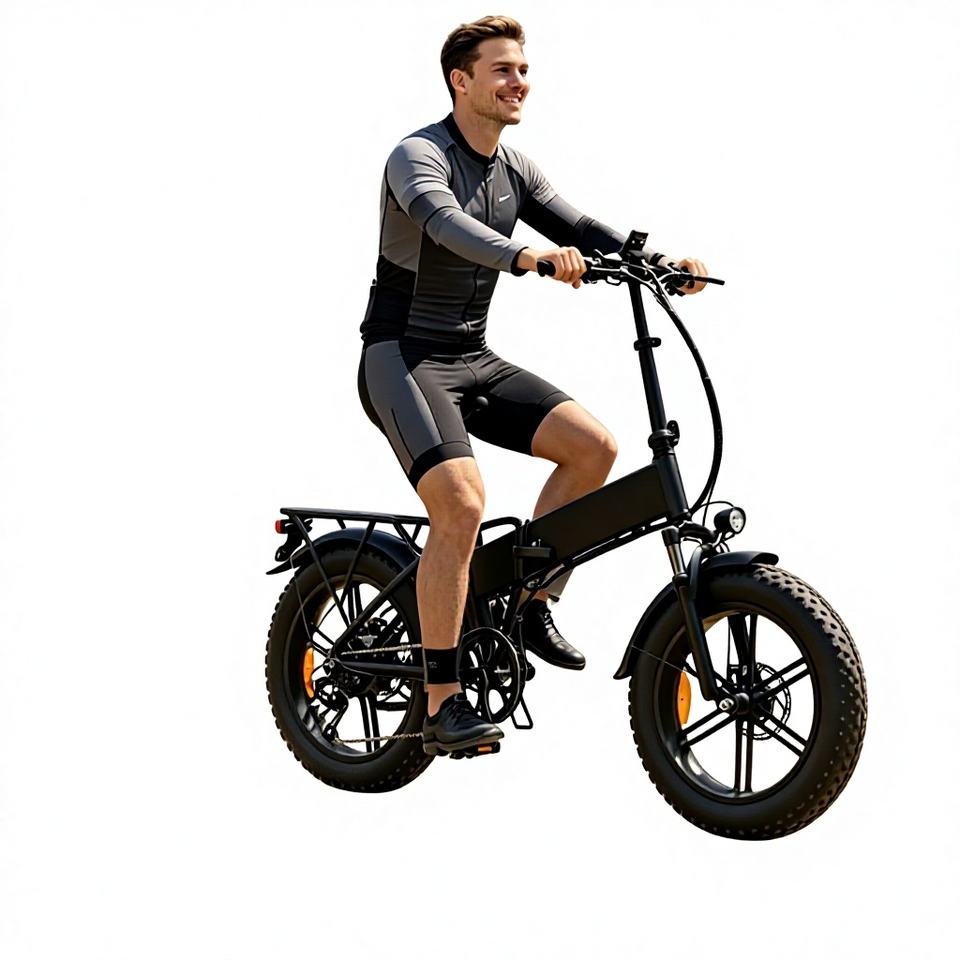
Key Background: Federal Rules VS State & Local Laws
Federal CPSC Standard for E-Bikes
The U.S. Consumer Product Safety Commission (CPSC) establishes the baseline definition of low-speed electric bicycles:
- Equipped with operable pedals
- Rated motor power ≤750 Watts
- Motor-assisted maximum speed: 20 mph
Vehicles that meet this standard are classified as consumer goods instead of motor vehicles. Important reminder: this is only a product certification rule. Road access regulations are fully controlled by each individual state.
Legal Priority Hierarchy
- State laws set baseline statewide requirements
- City and county local ordinances can implement stricter restrictions
- Independent rules apply in national parks, state parks and recreational trails
- Vehicles modified to remove factory speed limiters will generally be reclassified as mopeds or motorcycles, requiring driver licenses, vehicle registration and insurance.
United States E-Bike Regulations: The 3-Class Classification System
More than 44 U.S. states and Washington D.C. adopt the widely accepted three-class e-bike framework:
- Class 1: Pedal assist only; motor assistance cuts off at 20 mph
- Class 2: Pedal assist plus independent throttle drive; motor cuts off at 20 mph
- Class 3: Pedal assist only; motor cuts off at 28 mph; speedometer is mandatory
Important Note: Class 3 e-bikes face extra restrictions in nearly all states, including minimum age requirements, mandatory helmet laws, and bans on sidewalks and shared multi-use trails.
States Adopting the Full 3-Class E-Bike Regulation
Alabama, Arizona, Arkansas, California, Colorado, Connecticut, Delaware, Florida, Georgia, Hawaii, Idaho, Illinois, Indiana, Iowa, Kansas, Louisiana, Maine, Maryland, Michigan, Minnesota, Mississippi, Missouri, Nebraska, Nevada, New Hampshire, New Mexico, New York, North Dakota, Ohio, Oklahoma, Oregon, Rhode Island, South Dakota, Tennessee, Texas, Utah, Vermont, Virginia, Washington, West Virginia, Wisconsin, Wyoming
For these states: Class 1 & Class 2 maximum legal speed = 20 mph; Class 3 legal limit = 28 mph.
States That Do NOT Recognize Class 3 E-Bikes
These states enforce a universal maximum speed of 20 mph for all legal e-bikes. Any e-bike with assist speed exceeding 20 mph will be treated as a moped or motor vehicle: Washington D.C., Kentucky, Massachusetts, Montana, North Carolina (pending 2026 policy update), Pennsylvania, South Carolina
Special Jurisdiction: New Jersey
New Jersey implemented updated regulations in July 2026. All e-bikes with motors ≤750W are categorized as motorized bicycles with a 20 mph speed cap. All e-bikes require registration, license and helmet use. There is no legal Class 3 e-bike category.
Alaska
Alaska has not adopted the standardized three-class regulation. Low-speed e-bikes have a general speed limit of 20 mph. Vehicles exceeding this threshold are regulated as motorcycles, with detailed rules determined by local city codes.
Which US States Allow E-Bikes on Sidewalks?
General rule: Class 3 e-bikes are prohibited from sidewalks in almost all regions. The sidewalk policies below mainly apply to Class 1 and Class 2 e-bikes. Even in permissive states, cities have authority to issue local sidewalk riding bans.
States Where State Law Permits Class 1 & Class 2 E-Bikes on Sidewalks
Arizona, Arkansas, Florida, Hawaii, Kentucky, Maryland, Mississippi, Missouri, Montana, North Carolina, Rhode Island, Virginia
States with Locally Governed Sidewalk Policies (No statewide ban or permission)
Texas, Idaho, Michigan, Maine, New Hampshire, Colorado, Washington
Example: Texas state law allows e-bike sidewalk riding, but downtown areas in Austin, Dallas and Houston enforce sidewalk bans. Seattle prohibits e-bike riding on sidewalks even though Washington state does not impose a statewide ban.
States with Statewide Sidewalk Bans for All E-Bikes
California, New York, Illinois, Massachusetts, Oregon, Connecticut, Georgia, Minnesota, Nevada, New Jersey, Ohio, Tennessee, South Carolina, West Virginia, Indiana, Iowa, Kansas, Louisiana, Nebraska, New Mexico, North Dakota, Alabama, Alaska
Electric Scooter Laws by US State: Maximum Speed Limits
Critical distinction under U.S. law: standing electric scooters follow separate regulations from electric bicycles. There is no official federal definition for e-scooters. All speed limits and road access rules are defined by state legislation. Most cities can enforce lower speed limits than statewide standards.
States with E-Scooter Maximum Speed Limit: 15 mph
California, Hawaii, Minnesota, Nevada, Oregon, South Dakota
Supplementary note: New York State sets a statewide 20 mph cap for e-scooters, while New York City enforces a mandatory 15 mph speed limit.
States with E-Scooter Maximum Speed Limit: 20 mph
Alabama, Arizona, Arkansas, Colorado, Connecticut, Florida, Georgia, Idaho, Illinois, Indiana, Iowa, Kansas, Kentucky, Louisiana, Maine, Maryland, Massachusetts, Michigan, Missouri, Nebraska, New Hampshire, New Jersey, North Dakota, Ohio, Oklahoma, Rhode Island, Tennessee, Texas, Utah, Vermont, Virginia, Washington, West Virginia, Wisconsin
Massachusetts Special Rule: All e-scooter riders must hold a valid driver’s license, and helmets are required for every rider.
States Without Uniform Statewide E-Scooter Speed Rules (Regulated by Local Governments)
Alaska, Mississippi, Montana, North Carolina, South Carolina, Wyoming
Washington D.C.
The District of Columbia enforces a strict 10 mph maximum speed limit for electric scooters.
Pennsylvania
Pennsylvania lacks consistent statewide regulations for private electric scooters. Most public road access is restricted. Only limited shared rental e-scooter pilot programs operate in selected cities.
Universal National Traffic Rules for E-Bikes & E-Scooters
These regulations apply in every U.S. state:
- DUI laws fully apply to e-bike and e-scooter riders. Riding under the influence will result in fines or detention.
- Riders must follow traffic signals, stop signs and keep to the right side of roadways.
- Modifying vehicles to disable factory speed limiters is illegal. Violators face penalties equal to operating an unregistered motor vehicle.
- Front white headlights and rear red reflectors or taillights are required for night riding.
- Passenger carrying is prohibited on most single-person electric scooters.
Practical Compliance Tips for Importers, Distributors & Riders
- Cross-state transportation reminder: A model legal in one state may become illegal after crossing state borders. Class 3 e-bikes cannot be legally operated in states that do not recognize Class 3 standards.
- Best universal specification for nationwide U.S. sales: Electric scooters factory-locked at maximum 15 mph; Class 1 / Class 2 e-bikes limited to 20 mph. These specifications meet legal requirements across nearly all states.
- Before selling or riding in downtown zones, beach regions or university areas, check local municipal regulations. City rules often override statewide laws.
- National parks, state parks and multi-use trails have independent access policies different from city street and sidewalk rules.
Frequently Asked Questions
Is a Class 3 e-bike allowed on sidewalks?
Nearly all U.S. states ban Class 3 electric bicycles from sidewalks, even when Class 1 and Class 2 models are permitted.
Do I need insurance or registration for e-bikes and e-scooters?
Registration and insurance are not required for Class 1 / Class 2 e-bikes and private e-scooters in most states. Exceptions include New Jersey and Massachusetts. Shared rental scooters require commercial operator permits.
Can electric scooters ride on highways?
All states prohibit electric scooters and low-speed e-bikes from limited-access highways and interstates.
Conclusion
Legislation governing electric bikes and electric scooters remains fragmented across the United States. The three-class e-bike system has been widely adopted in most states, while e-scooter policies lack unified federal standards. Legal maximum speed and sidewalk access rules vary significantly between jurisdictions.
Whether you are importing micromobility products or arranging end-user riding, always verify the latest regulations for your target state and city. Complying with local speed limits and sidewalk policies helps avoid tickets, vehicle seizure and liability risks during traffic accidents.
Last Updated: August 2026
Leave a Reply